
Introducing our new London bloomer
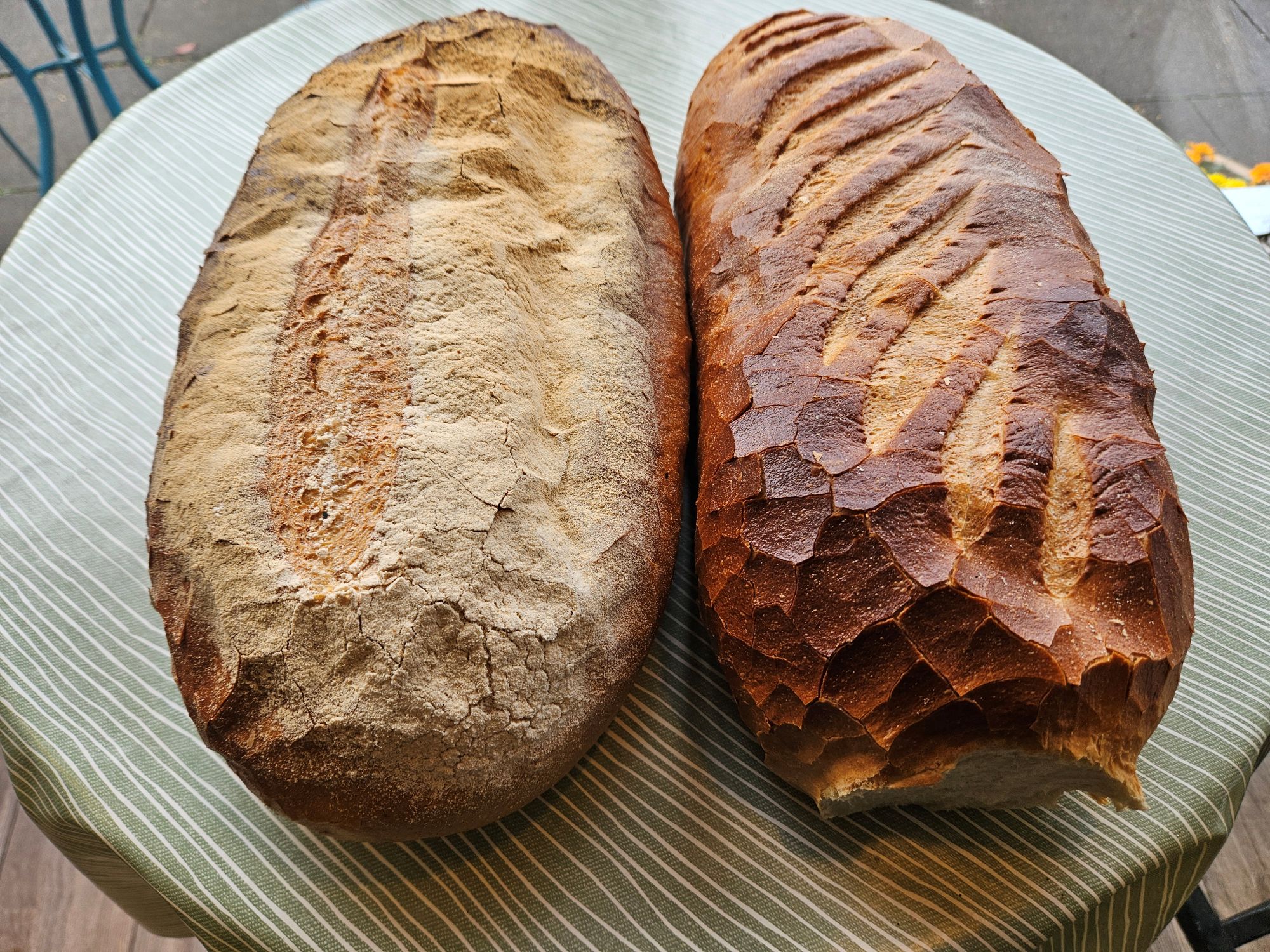
As the name suggests, this cool Britannia loaf comes originally from London and is thought to have been popularised by the capital’s bakeries in the mid-20th century.
It’s described as having a tighter crumb texture than other similar white breads and has a thicker, crunchier crust.
Perfect for sandwiches
This makes it perfect for sandwiches and toast when fresh and day-old slices are excellent for summer puddings too.
Its name comes from its shape. A bloomer is a loaf that has been made from dough that has been allowed to ‘bloom’, so rise in a free-standing situation, without a tin holding it in shape, either during the rise, or later when it’s in the oven baking.
Diagonal slashes
Across the loaf’s gently rounded top, there can be anything from seven to 13 diagonal slashes. The number of slashes depends on what the individual baker at the time of baking feels would work best.
It’s thought a loaf with seven scores represents the seven days of the week: allowing one ample slice a day.
However, the slices available later in the week would need to be used for making something other than sandwiches, as loaves likes our, that are made traditionally without chemical preservatives, are best on the day of purchase, unless sliced and frozen with one slice taken out and used each day.
It’s also said that a loaf with 13 scores represents Christ and his 12 Apostles.
However, these suggestions for the origin of the slashes are mere fancies, as in reality they are made to the dough before its final rise to help it rise well both before and during baking.
Traditional recipe
The traditional bloomer recipe adapted by our Head Baker Kev uses very little water and a high protein bread flour to help keep the dough in shape.
After mixing, our dough is left to ferment, for anything from six to 18 hours, or overnight, before being shaped into loaves.
This slow rise approach gives the bread a depth flavour too.