Classic treats and the stories behind them
British baking is far more than a collection of recipes. Every traditional bake tells a story of changing tastes, regional pride, royal influence and centuries of culinary innovation.
In the first of two blogs we’re telling you about the stories behind four of Britain’s best-known bakes.
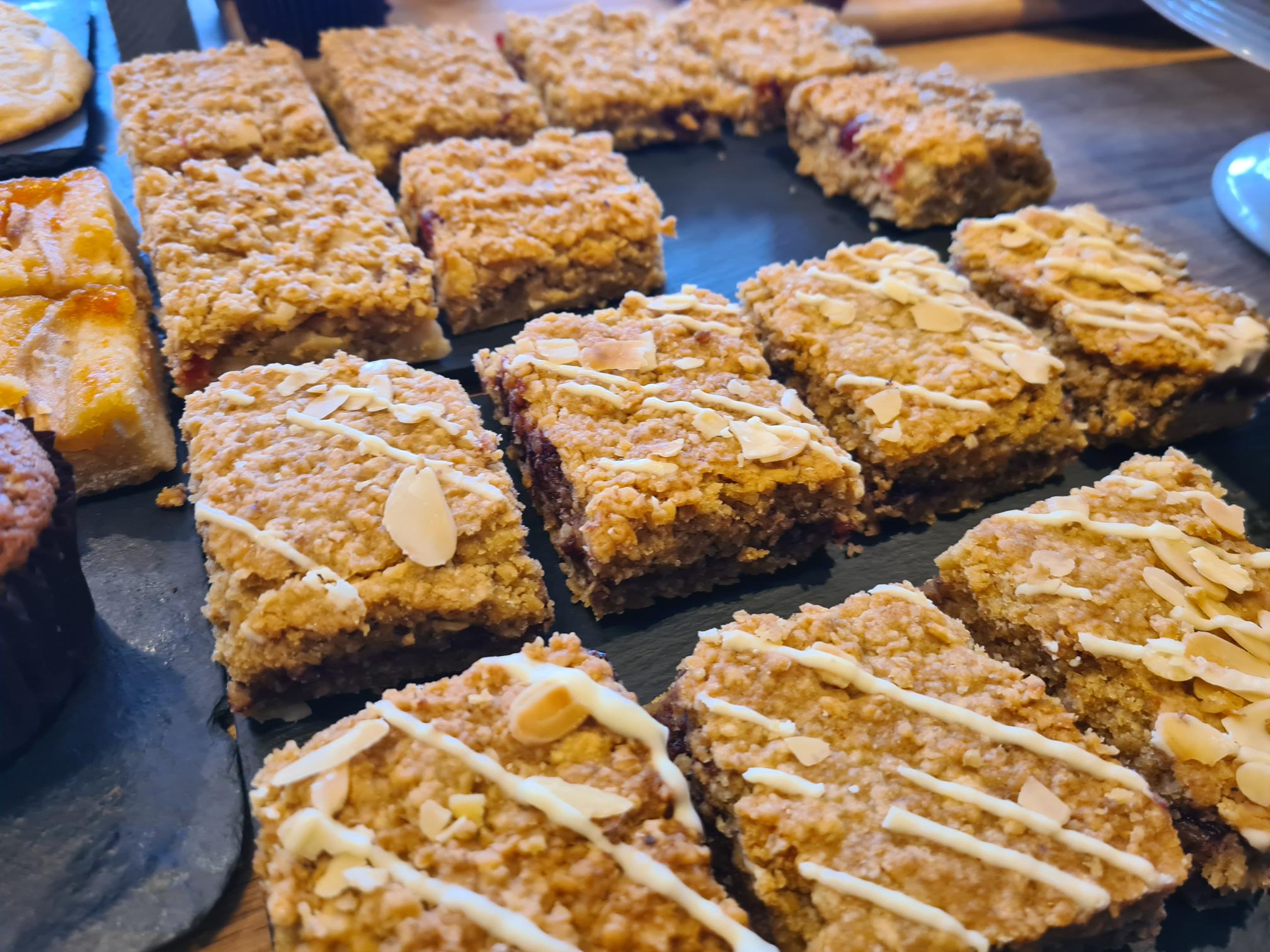
Flapjacks: From farmhouse fuel to tea-time favourite
The British flapjack, a simple combination of oats, butter, sugar and golden syrup, has its roots in Britain’s agricultural history. Oats were one of the few grains that thrived in Britain’s cooler climate, particularly in Scotland and northern England, making them a staple food for centuries.
Originally valued as a source of energy for labourers and farmers, oat-based bakes evolved over time into the chewy flapjack we know today. The introduction of golden syrup in the late Victorian era transformed many traditional baking recipes.
Scones: A Scottish invention with royal connections
Few British bakes spark as much debate as the humble scone. Historians generally agree that the scone originated in Scotland, where early versions were made from oats and cooked on a griddle rather than baked in an oven.
The modern scone became popular during the nineteenth century when Anna Russell, the seventh Duchess of Bedford, helped establish the tradition of afternoon tea.
Victoria Sponge: The cake of the Victorian Age
The Victoria sponge is perhaps Britain’s most iconic cake. Named after Queen Victoria, who reportedly enjoyed a slice with her afternoon tea, the cake emerged during a period when advances in milling technology produced lighter flour and more refined baking techniques.
Before the Victorian era, cakes were often dense and heavily fruited. The Victoria sponge represented a new style of baking: light, elegant and suitable for social occasions. Traditionally filled with raspberry jam and sometimes cream, it quickly became a staple of middle-class households.
Modern bakers often associate the Victoria sponge with Mary Berry. Her influence has helped maintain the cake’s status as a benchmark of baking skill.
Shortbread: Scotland’s buttery masterpiece
Shortbread’s origins can be traced back to medieval Scotland, where leftover bread dough was dried in ovens to create a form of biscuit known as ‘biscuit bread.’ Over time, yeast was replaced by butter, creating the rich, crumbly texture that defines modern shortbread.
The bake is often linked to Mary, Queen of Scots, who is said to have favoured a version known as ‘petticoat tails,’ a round of shortbread cut into wedges. Whether legend or fact, the royal association helped elevate shortbread’s status.
Preserving Britain’s baking heritage
The story of British baking is one of innovation, tradition and community.
Each bake tells a unique story, making them perfect subjects for anyone interested in traditional food, local history and the enduring appeal of Britain’s baking heritage.
Read the next blog in this series here.