
The History of Pumpkin Pie
Pumpkins have deep roots in America and were first cultivated in central American around 5,500 BC. They were one of the earliest foods the first European explorers brought back from the New World.
Their first mention in Europe dates to 1536 and within a few decades, they were grown regularly in England and referred to as ‘pumpions’, after the French ‘pompon’, a reference to their rounded form.
Of course, pumpkins are now hugely popular here in the UK and are synonymous with the month of October. They can be enjoyed in all sorts of ways, such as soups and curries, but as we are big baking fans here, we particularly enjoy a pumpkin pie.
How it all began
Pumpkin pie existed in many forms before it became what we know now. A 1653 French cookbook instructed chefs to boil the pumpkin in milk and strain it before putting it in a crust.
In 1670, English writer Hannah Woolley’s ‘Gentlewoman’s Companion’ advocated a pie filled with alternating layers of pumpkin and apple, spiced rosemary, sweet marjoram and thyme.
A Thanksgiving staple
By the 18th century, pumpkin pie had earned a place at the table at Thanksgiving celebrations across America. It was so popular that in 1705, a town famously postponed its celebrations for a week as there weren’t enough ingredients to make pumpkin pie.
Rise in popularity
During the early 19th century, recipes for pumpkin pie started appearing in Canadian and American cookbooks. Over the years it developed and made its way to England. It was prepared by stuffing the pumpkin with apples, spices and sugar and then baking it whole.
English recipe
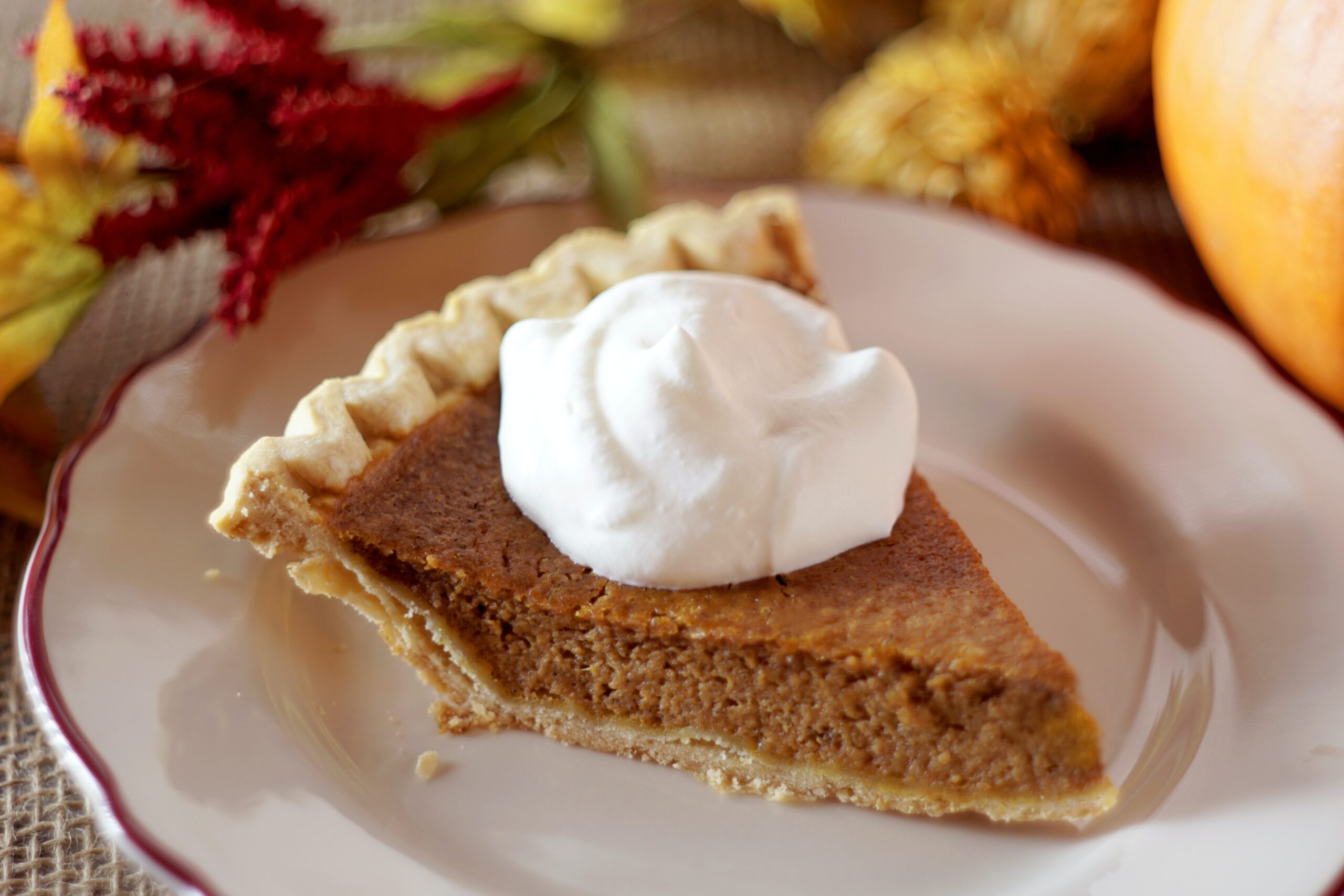
While American pumpkin pie is usually made with canned pumpkins, we like to use real pumpkins for ours. The smaller the pumpkin, the sweeter the flavour, so we mix the pumpkin pulp with eggs, sugar and a spice mixture, including cinnamon, ginger, nutmeg and cloves.
The mixture is then baked in a pie shell and topped with whipped cream, delicious!